01 / STANDARD
Write the service
Set the boundary, delivery points, quality bands, outage rules, and dispute window in a Reliability Covenant.
UPTIME STANDARDUPTIME Bond is a proposed financial instrument built on Proof-of-Uptime: independent evidence of delivered electricity, protected project cash, and restoration capital that moves before discretionary upside.
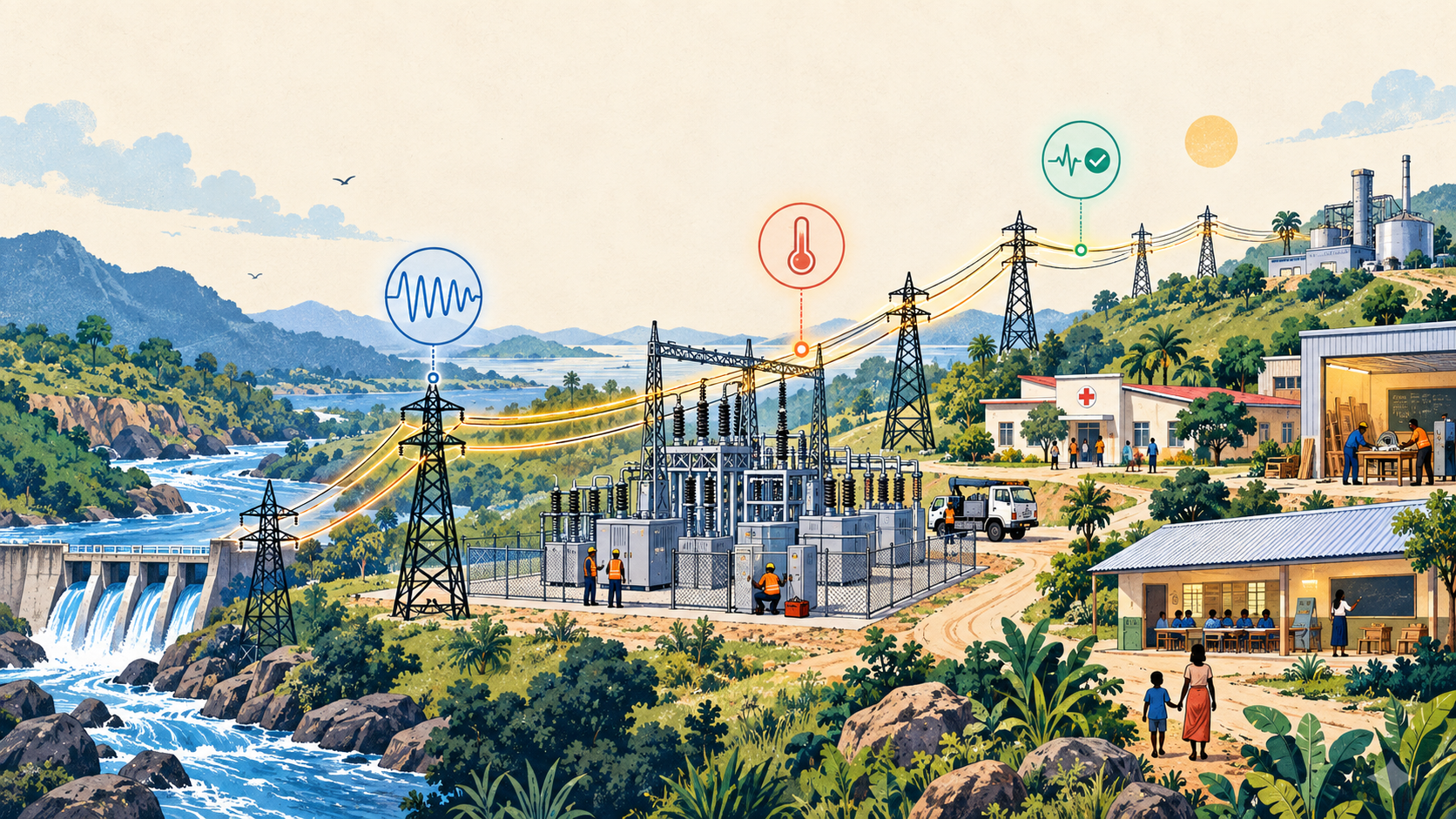
Many places are not short of energy in the abstract. They are short of dependable service at the boundary where a clinic, factory, cold chain, or data network needs it. The missing interface is between physical performance and financial control.
No Proof-of-Uptime.
No operator surplus.
UPTIME is the standard: the written service promise and the rules for evidence. Proof-of-Uptime is the evidence state. The UPTIME Bond is the financial instrument that changes who gets paid when that state changes.
Set the boundary, delivery points, quality bands, outage rules, and dispute window in a Reliability Covenant.
UPTIME STANDARDUse distinct evidence paths to settle an interval. The goal is disciplined proof, not a fake claim of certainty.
PROOF-OF-UPTIMERoute essential O&M, debt, reserves, and local value before variable operator upside.
UPTIME BONDWhen the service clears the covenant, upside is earned. When it fails, repair and investigation move first.
RESTORE · LEARN · REPEATThis is not a ranking of nations or a claim that every country must repeat Britain’s coal story. It is a teaching map: who has already built industrial-scale power, who is expanding while carrying coal, and who is trying to reach productive reliability under today’s climate and financing rules.
Climate finance is narrowing the route to new unabated coal. That is necessary for emissions, but it creates a real development test: countries that have not yet reached dependable industrial power cannot simply be told to skip the power system and wait. They need transmission, productive loads, concessional capital, and evidence that lets private capital participate in a cleaner build-out.
Use the steps below to move from history to the investment case. The aim is not to declare that one bond can industrialize a country. The aim is to show the chain of conditions that must hold before capital can safely accelerate the next corridor.
The industrial revolution was not simply a story about machines. It was a story about energy becoming concentrated, dispatchable, and dependable enough for factories, transport, refrigeration, communications, and urban life. Countries that have not crossed that threshold are not missing one technology; they are missing a dependable operating layer.
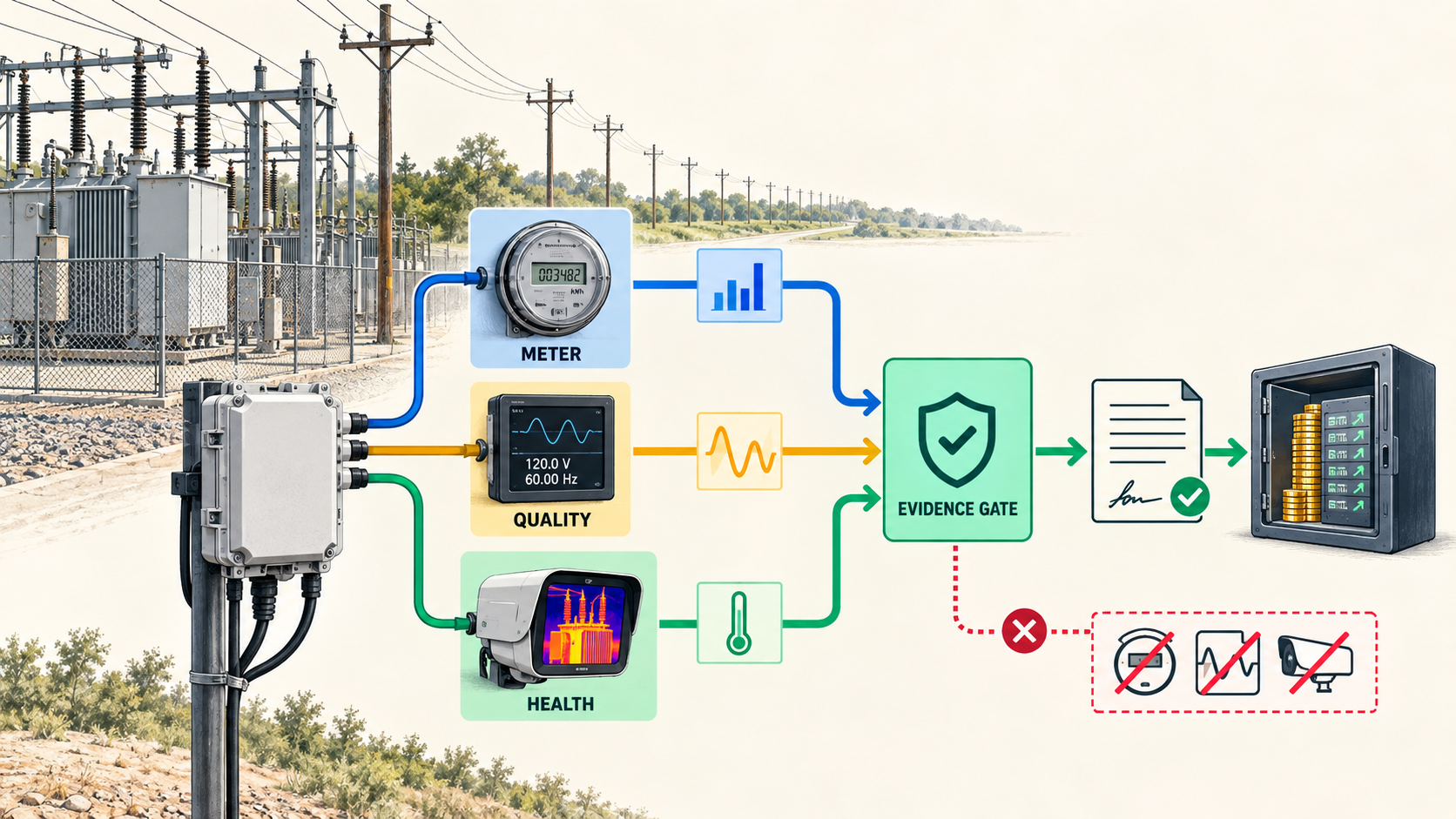
The SENSOR keeps a checkable record of the corridor: power delivered, power quality, and the condition of the equipment. The contract uses that record to decide what happens to the money: pay the normal waterfall, hold the claim, or send funds toward repair.
Move the controls. You are not solving a finance exercise—you are running one corridor through the UPTIME rules and watching what the evidence allows the money to do.
How many intervals delivered enough power at acceptable quality?
The minimum score required before operator upside can unlock.
At least two checks must agree: meter, power quality, and asset health.
The service score meets the target, independent evidence agrees, and proof is fresh.
96% of intervals counted as usable service. The target is met.
P(W) = valid intervals ÷ total intervalsThe evidence quorum is valid.
PoU = 2 of 3 + no tamper flagMaintaining now is the rational move.
Expected penalty = failure chance × restoration costThe formula gives the evidence a consequence. The next section asks whether that consequence still holds when the corridor, the data, or the institutions around it come under pressure.
Stress the physical network and the institutions around it: blackout, deferred maintenance, line theft, forged data, procurement conflict, and corruption. Watch what gets protected, held, audited, or repaired.
Evidence is complete. Essential operations and reserves are funded; only earned upside is released.
Imagine one hundred equal coins arriving from customers. The contract routes them in order; stress changes the size of the repair reserve and the operator’s variable upside.
The operator earns its upside after independent evidence shows that electricity arrived. When service degrades, repair money moves first.
Go deeper →Not a ranking of countries. A map of candidate corridors where the world is still building dependable electricity for industrial jobs, cold chains, hospitals, and AI-era infrastructure.
Candidate pathways where a measurable boundary, an anchor load, and a repair bottleneck can turn reliable service into industrial capacity.
Why it fits: Mining and industrial loads make a visible anchor; transmission reliability is the bottleneck to test.
What could stop it: FX, commodity cycles, concentration risk, and transmission governance require a full diligence screen.
The story gets you in. The paper shows whether the mechanism survives an investment committee, a utility engineer, a regulator, or a citizen who wants the full argument.
This is a self-serve field guide for the person who wants UPTIME in their country. It explains what to bring, who must sign, how to raise the first pool of capital, and how to earn a minister’s support without promising a miracle.
Choose one service boundary, one anchor load, and one repair failure. Bring outage logs, tariffs, asset maps, customer impact, and a list of who currently bears the loss.
Deliverable: a one-page corridor brief.Recruit the utility, regulator, energy ministry, local government, anchor customers, community representatives, insurer, and an independent measurement partner.
Deliverable: a signed roles-and-disputes matrix.Instrument a 90-day shadow pilot. Replay blackouts, data gaps, theft, storms, maintenance delays, and leadership turnover before anyone changes the cash waterfall.
Deliverable: an evidence and failure-mode dossier.Structure the protected account, restoration reserve, guarantee layer, local-currency plan, and disclosure package. Start with a bounded pilot, not a national promise.
Deliverable: an investment-committee term sheet.Separate measurement, custody, payout authority, procurement, and audit. Publish the covenant, conflict rules, tamper states, and community benefit ledger.
Deliverable: an integrity and oversight charter.After settlement works, document the standard so a neighboring feeder, province, or country can adopt it without importing the original operator’s politics.
Deliverable: a replication pack and public scorecard.Reliable power should be visible enough to finance—and valuable enough to protect. Start with the Academy, then bring a corridor you know.